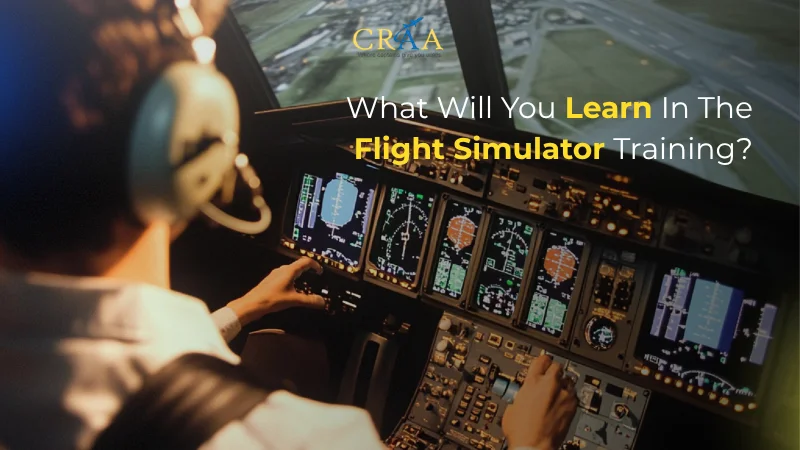
What Will You Learn In The Flight Simulator Training?
When you first think about becoming a commercial pilot, you probably imagine yourself sitting inside a real aircraft, taking off from a runway and learning directly in the sky. That is how most students picture pilot training. Then someone tells you about flight simulator training in Mumbai. Your first reaction might be simple: “Why should I spend time in a simulator when I can learn in an actual aircraft?” The answer becomes clear once you sit inside.
A flight simulator is not a video game. It is a training environment where you can make mistakes, repeat procedures, and build confidence before stepping into a real cockpit. The goal is not to replace flying. The goal is to prepare you for it.
You Learn How To Think Like A Pilot in Flight Simulator
Most student pilots assume flying is mainly about controlling the aircraft. In reality, a pilot is constantly making decisions. During simulator sessions, you learn how to monitor instruments, maintain situational awareness, follow procedures, and respond to changing conditions. You begin developing the habit of thinking ahead rather than reacting at the last moment.
This is one reason why simulator training in aviation has become such an important part of modern pilot education.
You Learn Cockpit Procedures Without Pressure
The cockpit can feel overwhelming during your initial training flights. You must remember checklists, monitor engine instruments, communicate with air traffic control, maintain heading, and watch your altitude, all at the same time.
A simulator allows you to practice these procedures repeatedly without worrying about fuel costs or flight time.
You can rehearse
- Pre-flight checks
- Engine start procedures
- Taxi procedures
- Takeoff briefings
- Climb, cruise, and descent checks
- Emergency checklists
The more familiar you become with these procedures on the ground, the more comfortable you feel in the aircraft.
You Learn Radio Communication
Many CPL students are not nervous about flying. They are nervous about talking.
Communicating with Air Traffic Control is a skill that takes practice. During simulator training, you can repeatedly practice standard aviation phraseology and understand how pilots communicate in different situations. This reduces hesitation and builds confidence before your real flights.
You Learn Navigation And Flight Plans
A commercial pilot must know more than how to fly. You must understand navigation, route planning, headings, airspace structure, and decision-making. Simulator sessions help you visualize these concepts.
You can see how navigation works during an actual flight scenario instead of simply reading about them in a book. So learning is faster and easier to retain.
You Learn Emergency Handling in Flight Simulator Training
One of the biggest advantages of simulator training is emergency practice. In a real aircraft, many emergencies can only be discussed theoretically.
In a simulator, you can safely practice situations such as
- Engine failures
- Instrument malfunctions
- Radio failures
- Adverse weather conditions
- Navigation errors
The objective is not to scare you. It is to prepare you so that unexpected situations do not cause panic.
You Learn To Correct Mistakes Faster
A unique benefit of simulator training is repetition. If you make a mistake during an approach, you can immediately reset and try again. You can repeat the same scenario multiple times until you understand what went wrong and how to fix it.
This type of focused practice is difficult and expensive to achieve in a real aircraft.
Why Choose Captain Aviation Academy in Mumbai?
Most students pick an academy and hope for the best. But at Captain Aviation Academy in Mumbai, there is a clear structure from day one. Ground classes cover navigation, cockpit procedures, communication, and flight planning. Your instructors explain each topic until it makes sense. No rushing through content just to move ahead.
Simulator sessions come next. You practice actual flight situations, work on quick decisions, and get comfortable in the cockpit. By the time you start flying a real aircraft, you already know what to expect. That kind of preparation sets you apart from the start.
If commercial pilot training in Mumbai is your goal, our academy is the best place to start. Reach out to us.
FAQs
1. What is the purpose of flight simulator training?
Flight simulator training helps you learn cockpit procedures, aircraft systems, navigation, communication, and emergency handling in a safe and controlled environment.
2. Does simulator training help during airline pilot interviews and assessments?
Yes. Simulator training improves situational awareness, cockpit discipline, and procedural accuracy. Also, training organizations and airlines expect these qualities from aspiring professional pilots.
3. Can simulator training reduce flying costs?
Yes. Training will help you to practice critical flight procedures at a lower cost than aircraft flying. It does not replace the mandatory flight hours needed for a CPL. But it will help you build stronger skills faster. So you spend less time struggling during real flight training.